
Arkansas History at MAD
In 1975, Dr. Paul Henley, Chief of Staff of Warner Brown Hospital in El Dorado, Arkansas, approached the hospital board of directors with a vision. He wanted the building to have a character expressed through art that reflected hope, joy, and beauty: all attributes that would indirectly lead its patients and their families toward health and life. An Artistic Development Program consisting of two phases, interior and exterior, was formed and all aspects of the program were funded by private benefactors. During the interior phase, paintings, murals, and a tapestry was commissioned. A segment of the second phase, completed in 1982, was Arkansas History, a series of relief panels created by Richard H. Ellis and Tony Sheets. These relief panels, cast from concrete, depict the early history of the state and had an exterior placement at Warner Brown. After 1996, the hospital changed ownership and the sculpture panels became the property of the SHARE Foundation. In honor and continuance of the original vision to uplift the community through the arts, The SHARE Foundation has relocatedArkansas History to the Murphy Arts District.
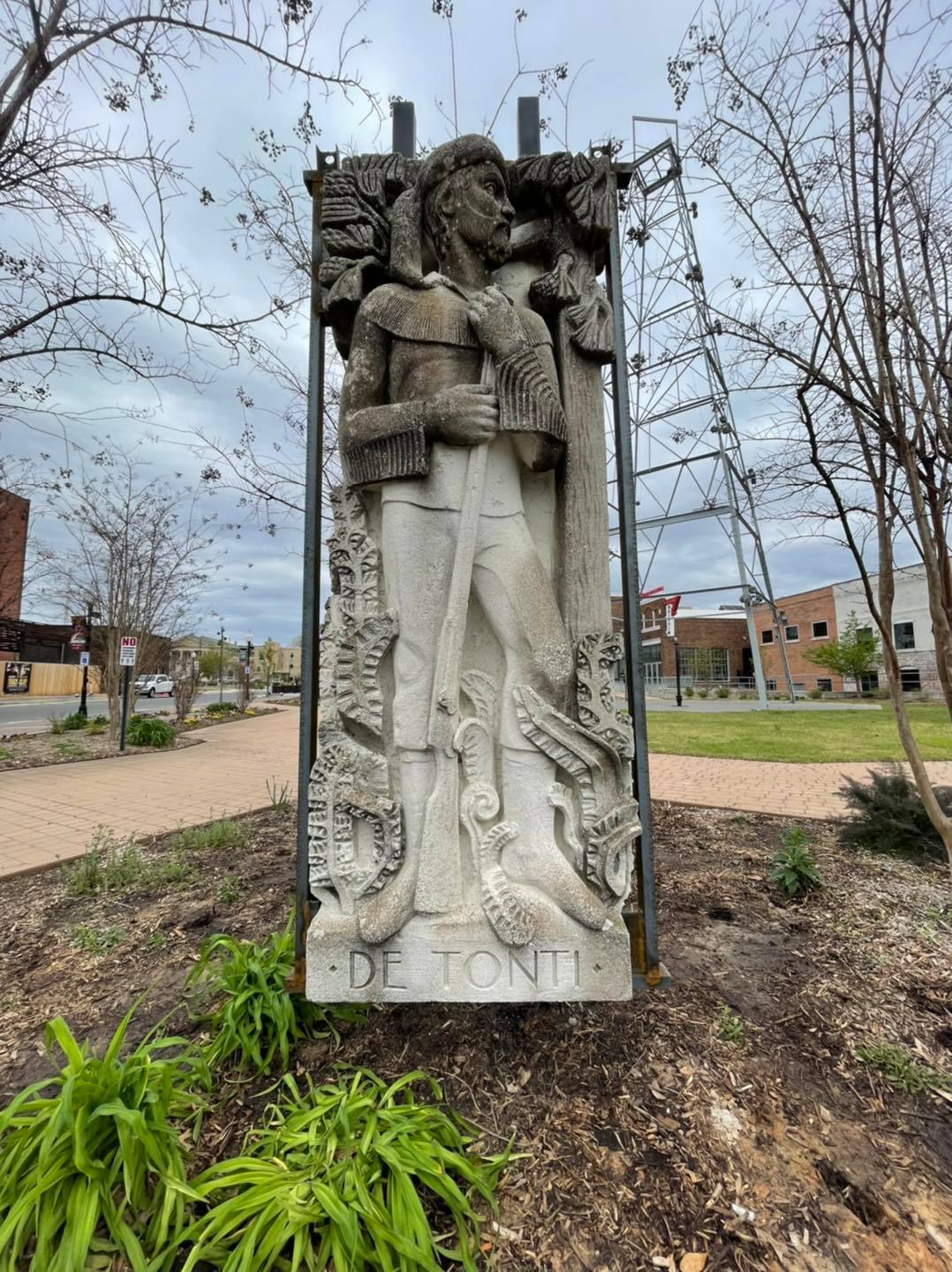
De Tonti
Henri de Tonti was an Italian mercenary soldier who assisted Sieur de LaSalle with North American exploration. De Tonti sailed the Mississippi River and established the first permanent European settlement in 1686, Arkansas Post, at the confluence of the Arkansas and Mississippi Rivers. De Tonti is known as “The Father of Arkansas.” The pine tree, also depicted on this sculpture, is the state tree of Arkansas. It represents timber, an important industry in South Arkansas.
Arkansas Post facilitated the fur trade between the French and the Quapaw. It was strategically important to the French, Spanish, and English for control of the Mississippi River Valley. In 1803, the area was acquired by the United States as part of the Louisiana Purchase.
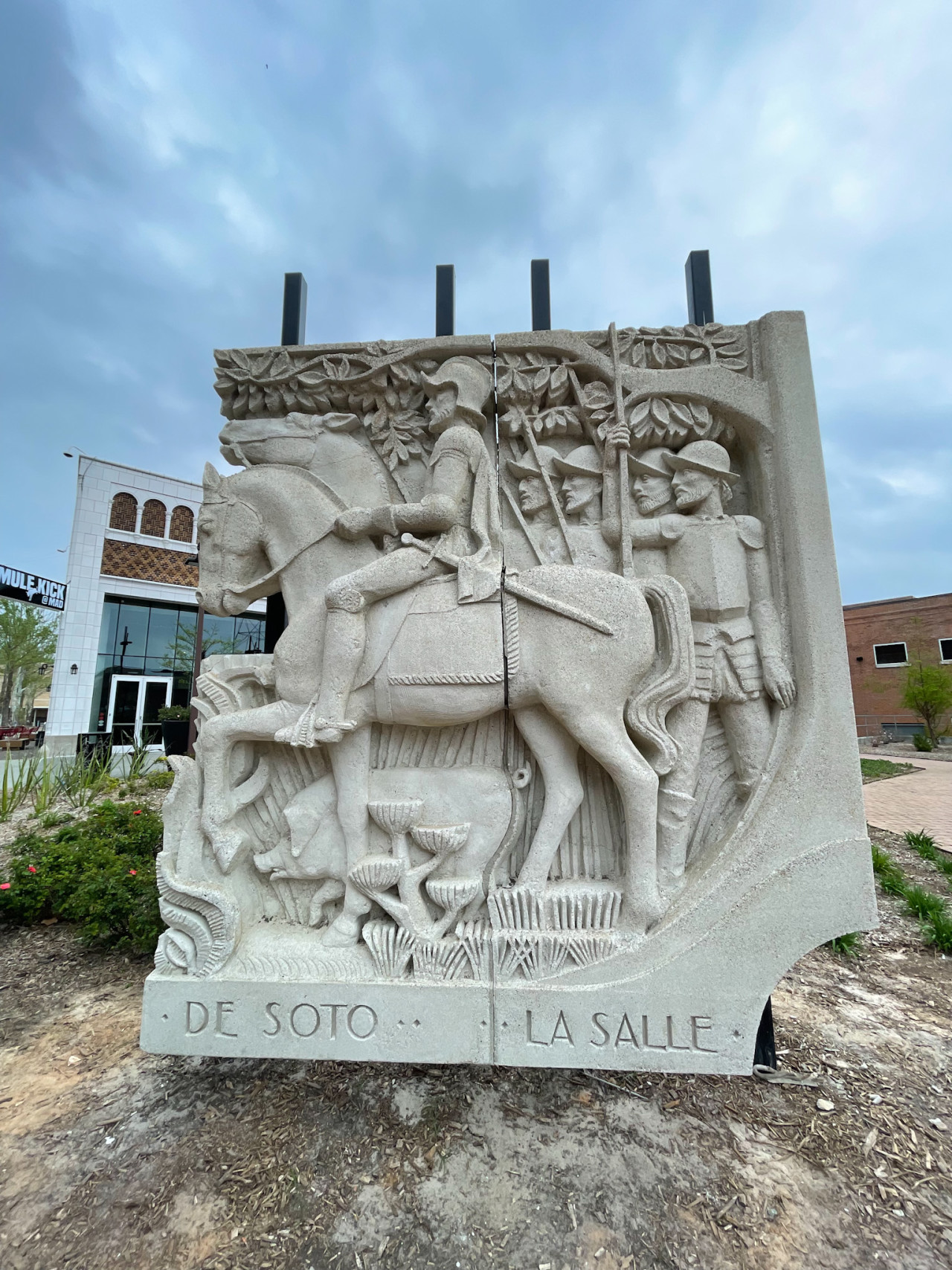
DeSoto-LaSalle
Spanish explorer Hernando DeSoto is credited with discovering the Mississippi River and leading the first European expedition into Arkansas in 1541. The group crossed the river south of Memphis and made their way through Arkansas and Louisiana. De Soto was recorded as having walked the entire length of the Ouachita River from Hot Springs, Arkansas to Jonesville, Louisiana. The Spaniards brought hogs to Arkansas and the Razorback is their descendant. French explorer Rene’-Robert Cavalier, Sieur de LaSalle journeyed down the Mississippi River in 1682, in search of a water route to the Gulf of Mexico. The intention was to establish fur trading posts from the Great Lakes to the Gulf. LaSalle was one of the first European explorers to make alliances with the Native Americans of Arkansas.
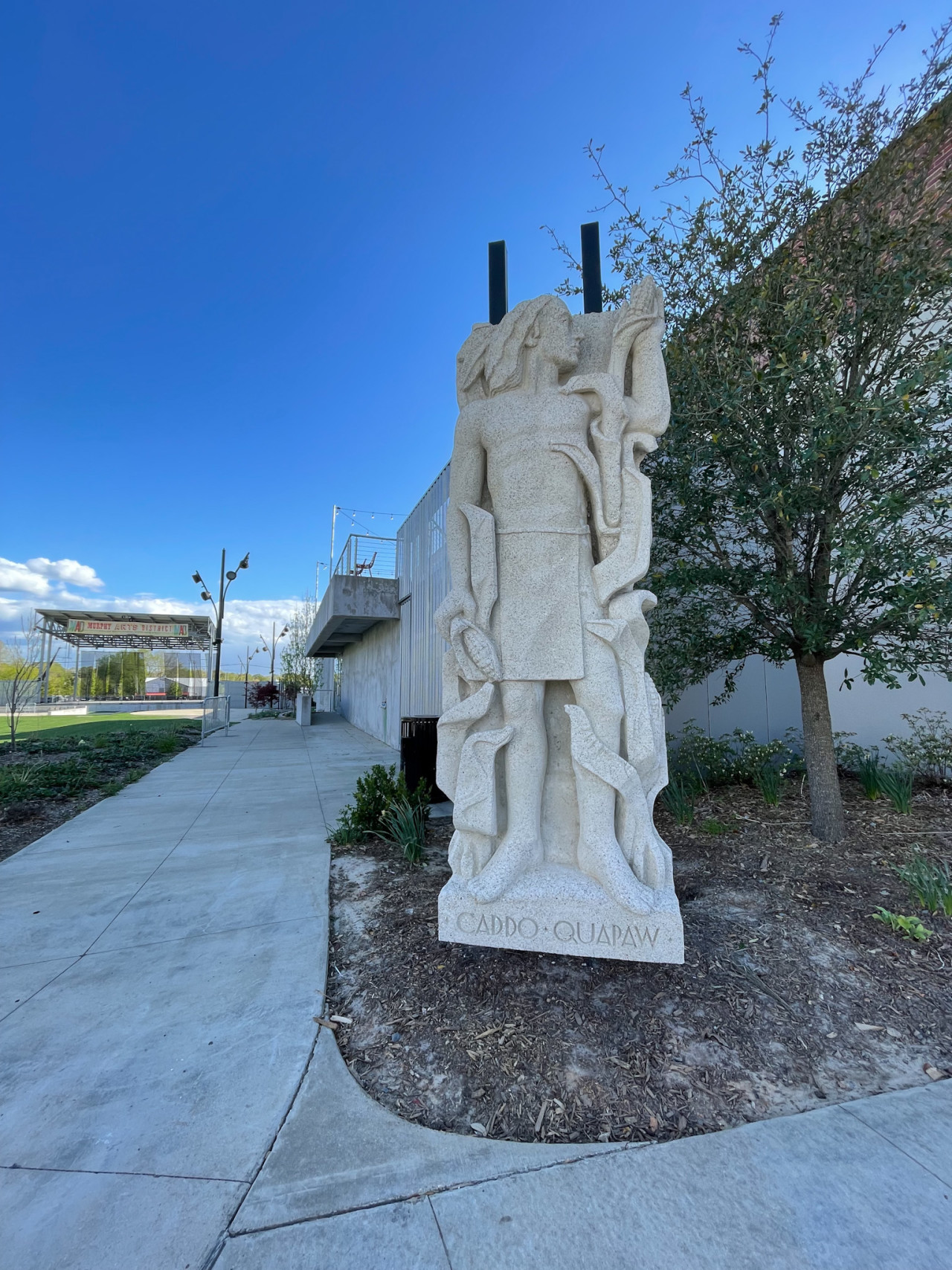
Caddo-Quapaw
The Quapaw were also known as “the people who live downstream.” They were skilled artisans, noted for their pottery. This panel represents corn as their main crop and these Native Americans as family.
The Caddo Indians were first described in the chronicles of the Hernando DeSoto expedition as it passed through South Aransas. Caddo people were farmers, salt makers, hunters, traders, craftsmen and created pottery. They were also a mound culture. They had a unique language and lived in villages in households that were separated by gardens and wood plots. Each farmstead consisted of dwellings and work areas for one or more closely related families.
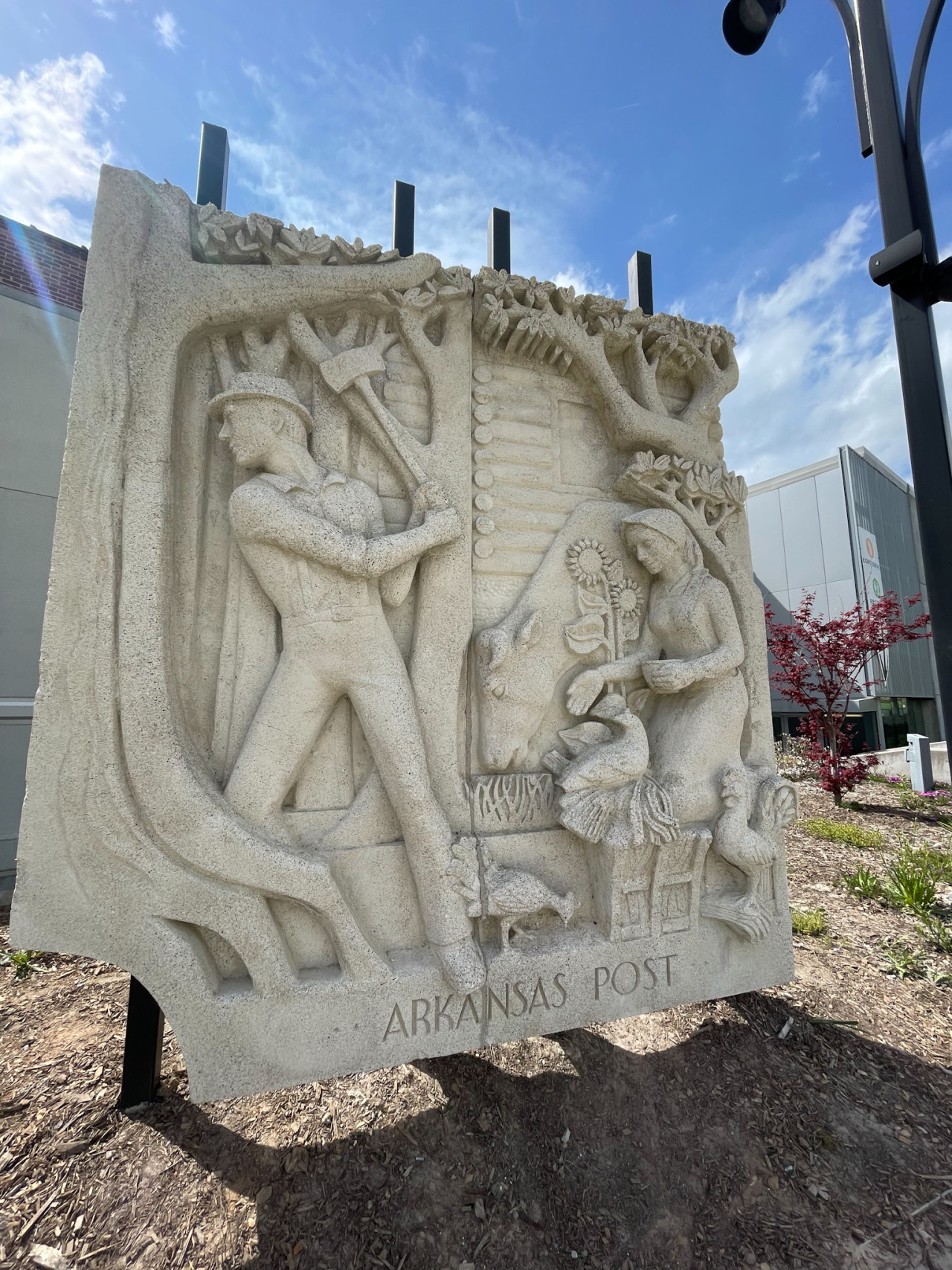
Arkansas Post
Arkansas Post was the first and most significant European establishment in Arkansas. When Henri deTonti arrived, he arranged with the local Quapaw and four other Frenchmen to build a trading post where they would exchange French goods for beaver furs. Eager for French trade and alliance, the Quapaw welcomed Arkansas Post and supported it throughout most of its history. Without Quapaw supplies and assistance, the Post would not have survived. This panel represents the settlement and settlers who became soldiers and gave the area protection. Arkansas Post was located at the confluence of the Arkansas River with the Mississippi river. Chickens are included as a forerunner of the poultry industry in Arkansas.
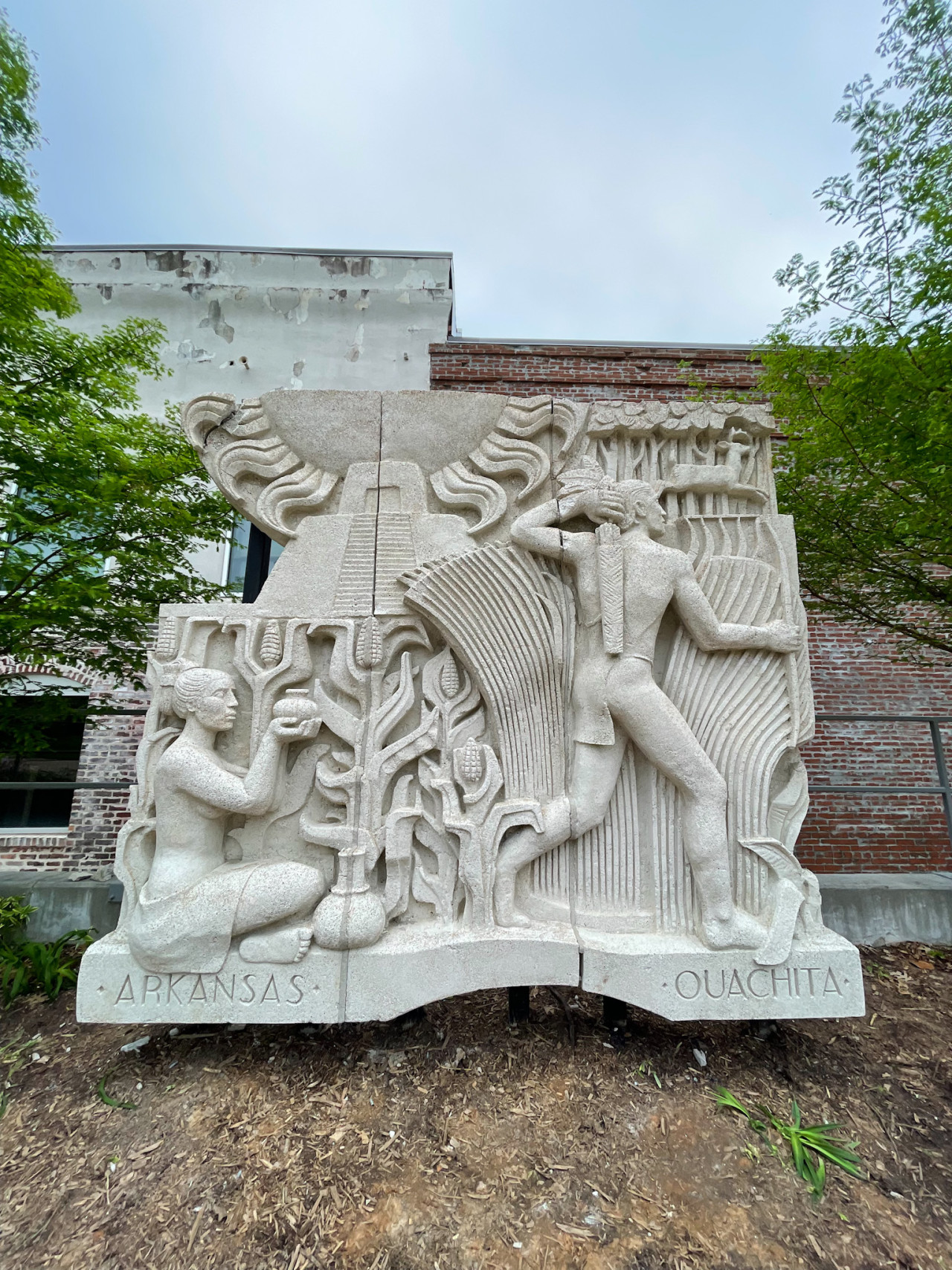
Arkansas - Ouachita
When the Spanish and French explorers arrived, they encountered the indigenous people that had occupied the region for thousands of years. The French called the Quapaw the “Arkansas” which was their interpretation of the Ohio Valley Indian’s term for “People of the South Wind”.
The Caddo word “Washita” meant “good hunting ground”. French explorers spelled this as “Ouachita”. Their influence continues to be found in names throughout Arkansas: Lake Ouachita, the Ouachita River and the Ouachita Mountains.
This panel illustrates these native people as hunters and planters. They were a mound culture and the sun portrays their spiritual rituals.
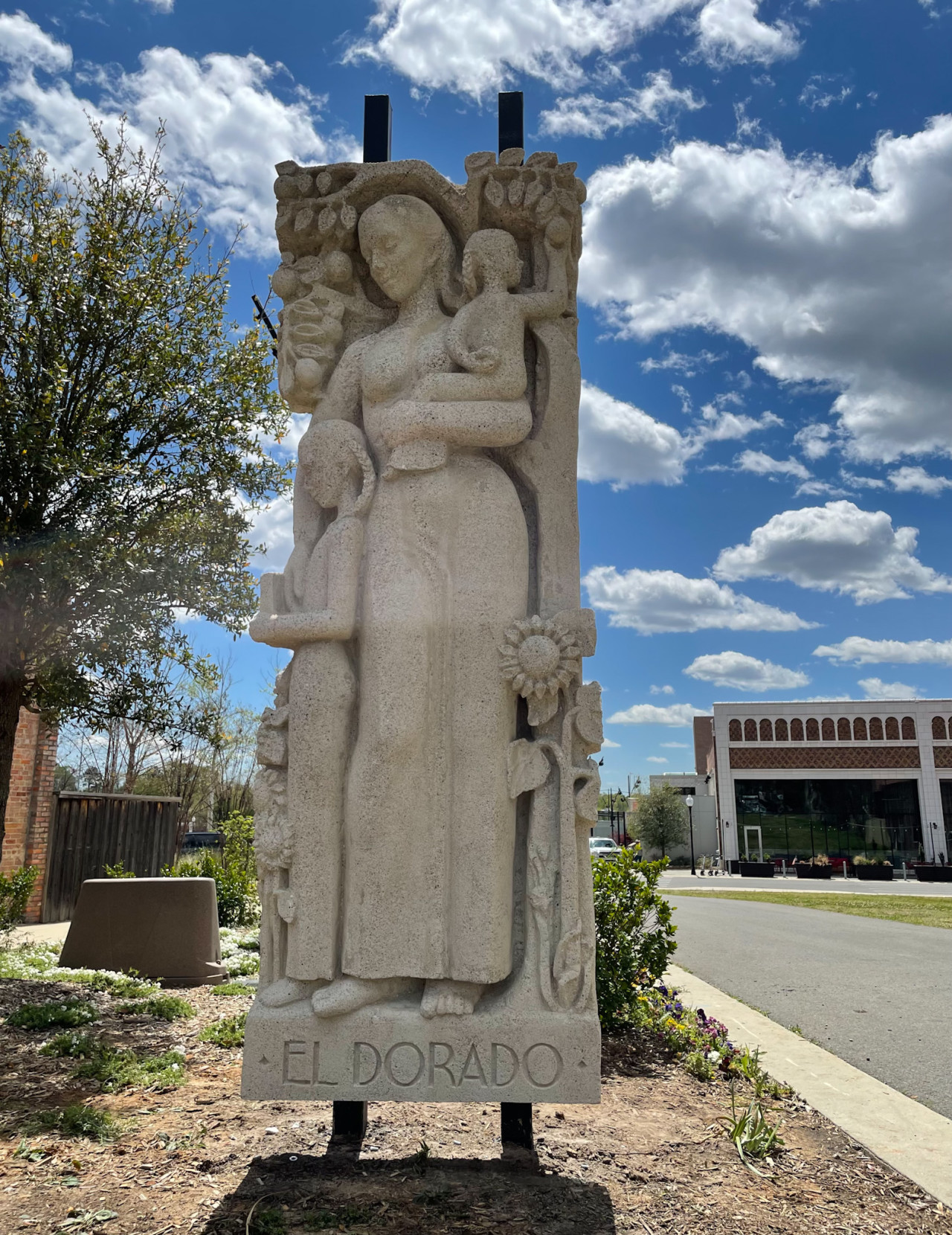
El Dorado
El Dorado was founded and named by Matthew Rainey. The city was the heart of the 1920’s oil boom. During World War II, it became a center for the chemical industry. That industry still plays a part of the economy as do oil and timber. El Dorado is the population, cultural, and business center of South Arkansas. This panel represents family life and is suggestive of the future. The apple blossom, the state flower of Arkansas, is also featured.